Of all the genres that Lego has not yet added to their product lines, steampunk remains the one for which I would hope above all others, even more than certain space themes. Since I was a child, steampunk has fascinated me, and, coupled with my love of Lego, steampunk-themed Lego creations were something I could spend hours browsing. The merging of technology and a certain grit/roughness/antiquity sparked the imagination and inspired building endeavors.
Guy Himber must have sympathized with those of us, who spent many hours online looking at steampunk MOCs (My Own Creation, a term for unique Lego builds done by folks outside of Lego itself). In Steampunk Lego, he has compiled an amazing collection of steampunk-themed creations, which are further divided into steampunk-themed categories, such as "Monowheels and Penny-Farthings," "Robots and Automatons," and "Clockwork Beasties." With my first glance at the index, I know I am going to be excited to reach the section on "Seven Seas," but "Floating Rocks" sounds intriguing, and there is a mysterious and eye-catching last category, called "SPACE!" (No puns about space, the final frontier, are intended, though maybe Guy did intend them!)
The book begins with a section, entitled "What Is Steampunk?" While I am quite familiar with the genre, it is entirely possible that this book may be bought for a child or AFoL (Adult Fan of Lego), who has never before encountered steampunk or who wishes to know more about the genre. This quick forward/introduction sets the scene for plenty of unique and creative ideas in the forthcoming pages. Past the introduction, I find that the author has also set the stage for the book to be a bit of a fantasy narrative, the journal of a man exploring a steampunk world and describing what he finds with captions, quotes, and photographs.
"Rolling Stock" takes the reader straight into the world of steampunk with a fantastic selection of train-centric designs. From single-man railcars to enormous rail-traveling monstrosities, they are all here. Civilian and military applications are covered, including an "Armada-Class Heavy Steam Railship" - a true battleship that rides the rails! Landships and battletanks also make an appearance, here with innovative designs, such as the "Light Steam Transport Vehicle," appearing for all the world like a steam-powered, military, covered wagon...with tank treads!
Steampunk often touches on bicycles, motorcycles, monocycles, and other wheeled transports of the sort, affecting them with the power of steam and a great deal of inventiveness. "Monowheels and Penny-Farthings" highlights a number of these creations, even including a monowheel design meant for racing, all while taking a tongue-in-cheek approach to details such as obstruction of view and vehicle stability, terming them as mere "petty dangers." A favorite creation of mine from this section was the "W8," a small personal monowheel design that looks like a vehicle one might store in their garage and go riding on the weekends, like a steampunk dirtbike of sorts!
Automobiles also have a place, here, in "Horseless Carriages." And yet "carriages" is taken loosely, including not only wheeled vehicles but multi-legged walkers, too. One of the most awesome models, featured here, involves a town built on rolling treads, which slowly move across the land, carrying shops, residents, and homes along on the journey. The sheer level of detail is mind-boggling. Of the more eclectic inventions, a crawling circus stage, powered by a large steam boiler, carries the local acting troop from one town to the next.
No steampunk-themed book would be complete without mention of "Robots and Automatons," a vision of a steam-powered future in which these man-made (and often humanoid in appearance) beings serve as workers, soldiers, and transports. Yet this chapter does not stop with the automatons themselves, also including a design of "Robot Research Labs" and several exosuits meant for wearing by the user in combat or underwater exploration (underwater combat not yet tested)!
The next chapter on "Armaments and Sundries" contains a curious mixture of life-size and smaller-than-life creations. From hats to weapons to musical instruments, even telephones, unique creations of the era of steam are featured here. Most impressive is the "Orrery," a mechanical model of the solar system, which appears to move upon a series of gears.
The "Cabinet of Curiosities" reminds the reader of walking into an antique shop, filled with all manner of strange trinkets and baubles, the use of some of which can only barely be imagined. All of the creations and gadgets in this chapter are of a size that could fit in one's pocket, save for a design called the "walking ark," a mysterious cabinet, outfitted with arms and legs, which travels about, collecting these curiosities. For all their small size, some of them are quite creatively done, and this chapter was certainly one of my favorites.
With the next chapter, Steampunk Lego shifts gears (no pun intended) to a different steam-powered theme: that of the high seas. Certainly, if railcars may be powered by steam, why not transports that sail the waterways of the world? And yet, contained within the chapter, entitled "Seven Seas," lies much more than just boats. Undersea craft, often designed to look like animals, themselves, are masterfully designed. With the power of steam, submersibles also feature highly in the collection of creations.
Leaving the seas and taking to the skies, "Airships and Dirigibles" showcases all manner of fantastic, steam-power flying machines. While some of the machines here are small, one-man craft, others appear as massive, flying cities or flying war machines. The "Zeppelin" with its interior Lego frame is particularly impressive, as are the airships built for racing.
Animals have not escaped the touch of steampunk, as shown in the "Clockwork Beasties" chapter. Big and small, realistic and fantastic, there are designs for transport, for war, and even for sport. Most intriguing was the "Warclaw," an ostrich-looking beast, able to be ridden by soldiers into battle.
This next chapter contains my favorite content of the entire book. The idea of "Floating Rocks" - gravity-defying islands in the sky - prompts an immensely high degree of creativity with each model being a unique masterpiece. In a variety of scales, from fortresses to humble abodes, powered by the weird magics and steam, calling them "floating rocks" sounds almost derogatory for such beautiful works. Truly, if for no other chapter, I recommend this book for this one.
In the last chapter lies "SPACE!" These models are absolutely amazing. For the most part, they represent steampunk versions of classic ships from Star Wars, but Battlestar Galactica and other more generic starcraft make appearances. While whimsical, the conversion of these craft to steam has been masterfully done.
Many thanks go to No Starch Press for providing me with the opportunity to review this book. I was thoroughly impressed with the organization and content therein. Truly, this book was a delight to peruse, and I highly recommend it for Lego-lovers with an interest in steampunk!
Photos credit to No Starch Press and used with permission.
Steampunk Lego is available directly from No Starch Press, here, and on Amazon, here.
Text is copyright 2014, Built from Ink and Tea.
Showing posts with label No Starch Press. Show all posts
Saturday, December 13, 2014
A Review of Steampunk Lego
Wednesday, March 5, 2014
A Review of Beautiful Lego
Contrary to the impression, which the title of this post may have given, I am not writing today to review a beautiful Lego set. Rather, I have in my hands the latest book offering by acclaimed Lego designer, Mike Doyle, Beautiful Lego. There are a lot of things that I could say about this book to describe it to you, the reader, yet I do not want to spoil the experience by revealing all of the contents. Thus, if you are looking for a brief word or opinion on this book, here it is: Beautiful Lego by Mike Doyle is an amazing, high quality, incredibly robust collection of some of the most awesome, and beautiful, Lego designs of this era. In my opinion, the inspiration and appreciation that this book drives goes beyond that of any other Lego book, ever.
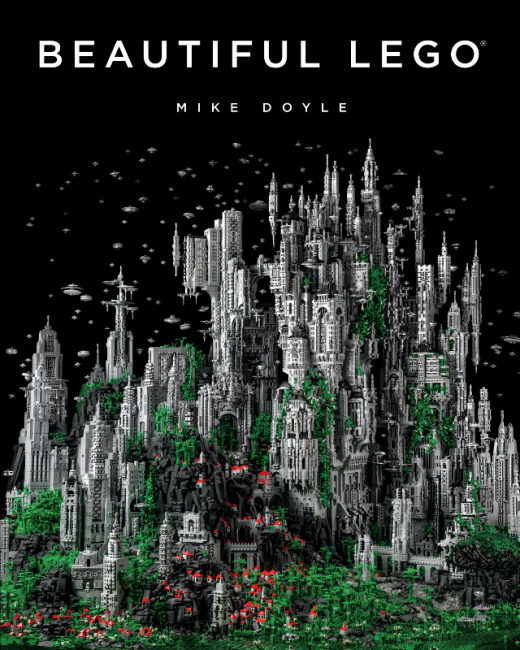
So you want to know more? Well, to begin, the cover photo of the book is stunning. A creation by the author (see the above photo), the massive, 200,000 piece diorama showcases what is certainly one of the most beautiful Lego creations of 2013. (Side note, the name of this creation is "Contact 1: The Millennial Celebration of the Eternal Choir at K'al Yne, Odan" and is built in a micro-scale. The full model is approximately 5' by 6'.) This cover draws the potential reader to the book, enticing them to open its pages for more amazing creations.
Picking up the book, I realize that "big and thick" are the most frank, yet best, descriptors. Truly a coffee table-style book, the fact that it contains so much content (and is paperback, nonetheless) is impressive. The organization of the book serves to carry the reader along. Interspersing sections on specific artists (and their creations) with sections of themed creations, the book never contains too much of one type of build or theme. Some of the themed sections feature multiple works by an artist, providing a contrast to other models.
I love the fact that Lego has its own sense of scale. When looking at a model, the relative size can often quickly be recognized by the bricks that are used. The photos in Beautiful Lego are well-shot, incredibly clear, and (in many cases) quite large, often filling half or whole pages, if not more. These photos impress the viewer and truly showcase the models, very well. Speaking of scale, I certainly appreciate the fact that so many scales were represented in the book. Ranging from micro-scale, such as Mike's creation on the cover, to larger-than-life animals and abstract human figures (see the seahorse, above), the models within Beautiful Lego suit nearly every preference for scale and theme of design. In addition to their relative scale, Mike has selected a good range of differently-sized models. Some of the smallest models are actually true-to-life scale, such as a collection of snails, while some of the largest models are scaled like the one on the cover. While the content of the photographs impresses the reader with its technical design, some of the models seek (and succeed) at bringing emotion or feeling to the viewer.
As part of this review, I have to share that my favorite section is the starships. Even within this section, while there are no life-size models, the creations represent a range of micro-scale to minifigure-scale. Some of the designs are simple, while others look to be quite complex. Here lies all kinds of originality and great work. The content of this book seeks to share the beauty in these creations, yet it will also inspire, so keep a bucket of Lego close at hand, while reading!
Related links
Mike Doyle's blog with more pictures of "Contact 1"
Mike's website with more information about the world of Odan
Beautiful Lego may be purchased from the No Starch Press website, here.
Photo credit to No Starch Press and Mike Doyle.
This book was provided for my review by No Starch Press.
Sunday, August 4, 2013
A Review of The Lego Build-It Book, Vol. 1!
Today's fabulous book review covers the latest Lego guide from No Starch Press - The Lego Build-It Book, Vol. 1: Amazing Vehicles. This is one guide for which I have been waiting quite a while, and I am quite excited to get into it!
The book begins with a nice introduction, including some expert building tips, such as how certain numbers of plates, when laid on their sides, equate to the same width as certain bricks, plus how this can be used for cool effects in building. Next, it jumps right into the instructions. One of the things that I found most fun was how all ten (yes, ten!) of the models in this book can be built from the same set of pieces. In fact, those pieces are all from one set. So, if you own the set, "5867: Super Speedster," you already have all of the pieces you need! Most of them are relatively common and should not be hard to find, even if you do not have that set. (There is a full list of all parts used at the front of the book.) The ten instructions are then marked for various levels of difficulty.
I opted to build the Classic Car, and, because I was utilizing the Lego Digital Designer, I could build it in colors other than the red, white, and black that came with the set (blue with yellow accents and green upholstery in this case). Turning to the portion of the book with the instructions, I immediately found that each step lists the parts needed in addition to showing where they go.
My building experience went well. While I anticipated having issues keeping the book open on account of the spine binding, it stayed open well on its own. Because I was not using actual bricks, the build took a bit longer than it would have otherwise. Additionally, there were a few places, where the instructions were not entirely clear, because the other side of the model was not shown in the instructions or the angle was not entirely descriptive. Some of the build techniques, especially in this model (which, you will note, is marked as being complex) were a bit complicated...but they were awesome! The inventiveness that went into this design was mind-blowing, especially it the use of SNOT techniques (Studs Not On Top). Check out the final model (I know, I am missing a windshield...)
The authors, Nathanaël Kuipers and Mattia Zamboni, did a fantastic job in arranging this book, and I found it to be a lot of fun. The best part of all this - Volume 2 of The Lego Build-It Book will be released in September of this year, and it will contain more amazing vehicles! Be sure to check out this book and be on the look out for the next volume. I also definitely suggest checking out the other Lego books that No Starch Press has to offer.
Many thanks to No Starch Press for the opportunity to review this book.
It is available from their website, here.
The book begins with a nice introduction, including some expert building tips, such as how certain numbers of plates, when laid on their sides, equate to the same width as certain bricks, plus how this can be used for cool effects in building. Next, it jumps right into the instructions. One of the things that I found most fun was how all ten (yes, ten!) of the models in this book can be built from the same set of pieces. In fact, those pieces are all from one set. So, if you own the set, "5867: Super Speedster," you already have all of the pieces you need! Most of them are relatively common and should not be hard to find, even if you do not have that set. (There is a full list of all parts used at the front of the book.) The ten instructions are then marked for various levels of difficulty.
I opted to build the Classic Car, and, because I was utilizing the Lego Digital Designer, I could build it in colors other than the red, white, and black that came with the set (blue with yellow accents and green upholstery in this case). Turning to the portion of the book with the instructions, I immediately found that each step lists the parts needed in addition to showing where they go.
My building experience went well. While I anticipated having issues keeping the book open on account of the spine binding, it stayed open well on its own. Because I was not using actual bricks, the build took a bit longer than it would have otherwise. Additionally, there were a few places, where the instructions were not entirely clear, because the other side of the model was not shown in the instructions or the angle was not entirely descriptive. Some of the build techniques, especially in this model (which, you will note, is marked as being complex) were a bit complicated...but they were awesome! The inventiveness that went into this design was mind-blowing, especially it the use of SNOT techniques (Studs Not On Top). Check out the final model (I know, I am missing a windshield...)
Many thanks to No Starch Press for the opportunity to review this book.
It is available from their website, here.
Monday, July 22, 2013
A Review of The BrickGun Book!
Here it is, folks! As promised, a review of another great offering from No Starch Press! You may recall me hinting, earlier this month, at new content to come on Built from Ink and Tea that would include such a review, and here we have it. Released in May of this year, The BrickGun Book by Jeff Boen takes a close and hands-on look at a genre of Lego modeling that is definitely not geared toward the typical young Lego audience. As the book warns, these models are not suitable for children under the age of twelve. That said, let us take a closer look at the book itself!
The author, Jeff Boen, begins with a short history of how he came to build model guns from Lego, which provides a nice background and lead-in to the instructions themselves (which comprise most of the book). Included in The BrickGun Book are instructions for building the BG22, 92FS, Desert Eagle, 1911, and Mac-11. A couple of these models have special additions. The BG22 has a removable magazine (complete with visible Lego bullet!), and the Mac-11 can launch rubber bands. That one of the models actually fired something impressed me, greatly. However, the other models are by no means just static creations. The BG22 has a movable slide, switchable safety catch, and working trigger. The 92FS, Desert Eagle, and 1911 include all of these features, plus a moving hammer that can be cocked. Not only does the Mac-11 fire rubber bands, the instructions seem to suggest that up to five rubber bands may be loaded at once.
After going through the book, the pictures of the 1911 model impressed me the most, complete with the look of the wooden laminate grip. The build itself took some time, but everything was very well explained. Next, I think it would be very cool to try one of these models in some other unique color - dark green, perhaps, or a bright red - just for fun.
One of my greatest difficulties with this book lies in the style of binding. The binding itself is excellent; however, it is most easy to use Lego instructions when they can lay flat and open with ease - something that the binding on this book was not aimed to do, especially when near the beginning or the end. Thus, I found, while building, that I had to prop the book open, placing weights on either side to spread the pages, which was a bit annoying, when it came time to turn the pages. (Yes, an ink bottle proved to be a nice page holder.)
The instructions themselves are incredibly clear. In some instances, I felt myself wishing that the instructions in Lego's booklets were as easy to follow. Mostly, I could see this affecting a younger or newer group of Lego builders, whose experience, with the various pieces and how they fit together, was perhaps not as advanced. Of particular note is a section in the front of the book, describing how the instructions are laid out and how best to read them. Preceding each section of instructions, a parts list provides quantities, suggested colors, descriptions, and even the official Lego part number for each piece that will be needed in the model. This alone takes the instructions to a higher level of technicality than Lego's own manuals - a necessity when you are dealing with parts that do not come prepackaged together. For myself, it allowed me to fully prepare for building, being assured that I was not going to be scrambling to find an essential piece, after beginning.
Lego enthusiast? Handgun enthusiast? Realistic model enthusiast? Check out this book. It is definitely worth your time. If bigger guns are more your thing, be sure to check out LEGO Heavy Weapons, also available from No Starch Press.
The BrickGun Book, by Jeff Boen, is available directly from No Starch Press and Amazon.com. If you are looking for even more cool BrickGun instructions, Jeff Boen runs the website, BrickGun.com, where he sells kits that include all the pieces necessary to build the models, featured in The BrickGun Book. Additionally, his website offers fantastic wallpapers, a disc of all of his BrickGun building instructions (including some not found in The BrickGun Book), and some free instructions. I found these free instructions to be very cool, as they mainly show how to build add-ons, such as laser sights, flashlights, and scopes for the BrickGun models!
(Note: I now have a tag, below this post and on the right sidebar, for all of the posts involving books from No Starch Press! Check it out and take a look at other great Lego books, which I have reviewed.)
Photo credit to Built from Ink and Tea.

The author, Jeff Boen, begins with a short history of how he came to build model guns from Lego, which provides a nice background and lead-in to the instructions themselves (which comprise most of the book). Included in The BrickGun Book are instructions for building the BG22, 92FS, Desert Eagle, 1911, and Mac-11. A couple of these models have special additions. The BG22 has a removable magazine (complete with visible Lego bullet!), and the Mac-11 can launch rubber bands. That one of the models actually fired something impressed me, greatly. However, the other models are by no means just static creations. The BG22 has a movable slide, switchable safety catch, and working trigger. The 92FS, Desert Eagle, and 1911 include all of these features, plus a moving hammer that can be cocked. Not only does the Mac-11 fire rubber bands, the instructions seem to suggest that up to five rubber bands may be loaded at once.
After going through the book, the pictures of the 1911 model impressed me the most, complete with the look of the wooden laminate grip. The build itself took some time, but everything was very well explained. Next, I think it would be very cool to try one of these models in some other unique color - dark green, perhaps, or a bright red - just for fun.
One of my greatest difficulties with this book lies in the style of binding. The binding itself is excellent; however, it is most easy to use Lego instructions when they can lay flat and open with ease - something that the binding on this book was not aimed to do, especially when near the beginning or the end. Thus, I found, while building, that I had to prop the book open, placing weights on either side to spread the pages, which was a bit annoying, when it came time to turn the pages. (Yes, an ink bottle proved to be a nice page holder.)
The instructions themselves are incredibly clear. In some instances, I felt myself wishing that the instructions in Lego's booklets were as easy to follow. Mostly, I could see this affecting a younger or newer group of Lego builders, whose experience, with the various pieces and how they fit together, was perhaps not as advanced. Of particular note is a section in the front of the book, describing how the instructions are laid out and how best to read them. Preceding each section of instructions, a parts list provides quantities, suggested colors, descriptions, and even the official Lego part number for each piece that will be needed in the model. This alone takes the instructions to a higher level of technicality than Lego's own manuals - a necessity when you are dealing with parts that do not come prepackaged together. For myself, it allowed me to fully prepare for building, being assured that I was not going to be scrambling to find an essential piece, after beginning.
Lego enthusiast? Handgun enthusiast? Realistic model enthusiast? Check out this book. It is definitely worth your time. If bigger guns are more your thing, be sure to check out LEGO Heavy Weapons, also available from No Starch Press.
The BrickGun Book, by Jeff Boen, is available directly from No Starch Press and Amazon.com. If you are looking for even more cool BrickGun instructions, Jeff Boen runs the website, BrickGun.com, where he sells kits that include all the pieces necessary to build the models, featured in The BrickGun Book. Additionally, his website offers fantastic wallpapers, a disc of all of his BrickGun building instructions (including some not found in The BrickGun Book), and some free instructions. I found these free instructions to be very cool, as they mainly show how to build add-ons, such as laser sights, flashlights, and scopes for the BrickGun models!
(Note: I now have a tag, below this post and on the right sidebar, for all of the posts involving books from No Starch Press! Check it out and take a look at other great Lego books, which I have reviewed.)
Photo credit to Built from Ink and Tea.
Saturday, July 13, 2013
New Lego Books from No Starch Press and BrickCon
Some of you may remember the review that I did, some time ago, of The Lego Adventure Book from No Starch Press. I just found out that this book and others from No Starch Press will soon be available in German! How cool is that?
Additionally, No Starch Press' Unofficial Lego Technic Book is also now available in German. Both can be purchase from Amazon.de.
Speaking of No Starch Press, expect another review of one of their recent offerings, coming soon to Built from Ink and Tea!
In other news, registration for BrickCon 2013 is now open, so if you love Lego and will be in the Seattle, Washington, USA area between October 3rd and 6th of this year, I highly recommend checking it out.
![]() |
| Photo credit to Amazon.de |
Speaking of No Starch Press, expect another review of one of their recent offerings, coming soon to Built from Ink and Tea!
In other news, registration for BrickCon 2013 is now open, so if you love Lego and will be in the Seattle, Washington, USA area between October 3rd and 6th of this year, I highly recommend checking it out.
Sunday, November 18, 2012
A Review of The Unofficial Lego Builder's Guide, 2nd Edition!
I have been given the amazing opportunity to review yet another awesome Lego book and share the details with you all! The Unofficial Lego Builder's Guide, 2nd Edition is a new book by Allan Bedford, recently released by No Starch Press.
My first impressions of this book were that it was immensely packed with information! The 200+ pages all contain tip-after-tip for learning to build with Lego, improving Lego building skills, or just getting ideas for building. When I first received this book, I flipped through it quickly and was struck by the thought that this could easily be a textbook for a Lego building class, if such a thing exists. (If it does not, it ought to exist, and I would love to be the first to sign up...especially if this book were to be used!) Quite frankly, this book is awesome.
The Unofficial Lego Builder's Guide begins by covering the very basics of Lego building before continuing to a discussion of scales in Lego (minifigure scale, miniland, microscale, etc). Chapters are then devoted to such topics as sculptures, mosaics, conceptualizing a Lego design (deciding on things like shape, color, proportion, and repetition), and other things to do with Lego (such as creating custom building instructions or making games). Interspersed among the chapters are step-by-step instructions for small projects related to the chapter. These projects are well-explained and help solidify the point being made in the text. The author has chosen the examples well, and the inclusion of a myriad of pictures lends descriptive power.
The final two sections of the book differ slightly from the others. The first is called the Brickopedia. This visual encyclopedia of Lego brick shapes/styles gives a lot of information (such as name, part number, and notes for usage) for each listing. The selection of bricks is massive, and yet, by the author's own admission, it contains only a fraction of the total Lego piece catalog. All of the bricks are separated by category, and there is also a section of special Lego elements, which could be very useful in creating new models. The second slightly different chapter details the use of design grids in conceptualizing and designing Lego models by using what are essentially Lego blueprints. A link is provided, so that readers can download and print their own design grids for personal use.
In conclusion, I found that The Unofficial Lego Builder's Guide contains a lot of technical Lego knowledge. While this book may not be the right choice for someone looking to get inspiration for a new model, it should certainly provide them with the techniques for building well-constructed and excellent-looking models. For new Lego builders and experienced designers alike, this book is a worthwhile purchase and a worthy addition to the Lego-building table or bookshelf.
The Unofficial Lego Builder's Guide, 2nd Edition may be purchased here from No Starch Press or here from Amazon.com.
Images used with permission from No Starch Press.
My first impressions of this book were that it was immensely packed with information! The 200+ pages all contain tip-after-tip for learning to build with Lego, improving Lego building skills, or just getting ideas for building. When I first received this book, I flipped through it quickly and was struck by the thought that this could easily be a textbook for a Lego building class, if such a thing exists. (If it does not, it ought to exist, and I would love to be the first to sign up...especially if this book were to be used!) Quite frankly, this book is awesome.
The Unofficial Lego Builder's Guide begins by covering the very basics of Lego building before continuing to a discussion of scales in Lego (minifigure scale, miniland, microscale, etc). Chapters are then devoted to such topics as sculptures, mosaics, conceptualizing a Lego design (deciding on things like shape, color, proportion, and repetition), and other things to do with Lego (such as creating custom building instructions or making games). Interspersed among the chapters are step-by-step instructions for small projects related to the chapter. These projects are well-explained and help solidify the point being made in the text. The author has chosen the examples well, and the inclusion of a myriad of pictures lends descriptive power.
![]() | |
| A train station for which instructions are given to illustrate design techniques |
In conclusion, I found that The Unofficial Lego Builder's Guide contains a lot of technical Lego knowledge. While this book may not be the right choice for someone looking to get inspiration for a new model, it should certainly provide them with the techniques for building well-constructed and excellent-looking models. For new Lego builders and experienced designers alike, this book is a worthwhile purchase and a worthy addition to the Lego-building table or bookshelf.
The Unofficial Lego Builder's Guide, 2nd Edition may be purchased here from No Starch Press or here from Amazon.com.
Images used with permission from No Starch Press.
Monday, November 5, 2012
A Review of The Lego Adventure Book, Vol 1!
Some time ago, an author from No Starch Press emailed me about being featured in a book that he was writing. The topic was a feature on adult fans of Lego (or AFoLs, as they are called). More than happy to contribute to a book about Lego, I sent him the requested information and thought nothing more of it.
Fast forward several years. Last autumn, I finally saw the result of the author's labor, come to life in a book, called The Cult of Lego. This was definitely an awesome, coffee table-style book, all fancy in hardback, big pictures, and a plethora of information.
Then, a month ago, No Starch Press (the publishers of The Cult of Lego) contacted me again, asking if I would be interested in seeing and reviewing several of their latest offerings to the Lego community. One of these books, The Lego Adventure Book, Vol. 1, was what I chose to present to you today.
The Lego Adventure Book, Vol. 1: Cars, Castles, Dinosaurs, & More! is the title of this lovely, large-size, hardback book, and this book is AWESOME. Okay, now that I have that very important bit out of the way, let me tell you more.
Written by Megan Rothrock (truly an AFoL), The Lego Adventure Book, Vol. 1, takes the reader on a clever, Lego-illustrated journey through a myriad of Lego creations. The format is comic-like, slightly reminiscent of scenes from the Lego Magazine, where still images are brought to life with the addition of speech bubbles and simple storyline. On that topic, the photography in this book is wonderful. The pictures are clear, crisp, and well-taken - definitely a plus for a book about Lego, where readers may want to see details or attempt to emulate the models.
The story begins with the author's Lego character (sometimes called a "signature figure" or "sigfig") telling the reader about a concept for an "Idea Lab." The reader is then drawn into the story, as instructions are given for the creation of the author's headquarters for building-adventures.
These initial instructions definitely drew me to the book. Below the surface, what was presented was more than the "Idea Lab." It was a very versatile building with unique features in its construction, which could open the door to a whole world of possibilities - just from this first section of the book! Truly, it could be used for a nearly-infinite number of creations.
Instructions for a simple, yet completely customizable, vehicle follow those for the "Idea Lab." By this time, I am not yet a quarter of the way into the book, but I am inspired to build with Lego, even as I read! (I restrain myself, for the sake of this review.) The instructions themselves are clear and easy to understand. Most of the time, they begin by showing pictures of all the necessary parts, separated by color (though the book emphasizes substituting your own color choices, if you lack a certain colored part or want a different design). Each step visually highlights the addition of pieces, in order to make the steps easy to follow. The addition of special building tips helps to clarify or present valuable shortcuts for the instructions.
As the book progresses, the author highlights a number of Lego builders, presenting it as an adventure story to introduce these Lego enthusiasts and their creations. Each of them is presented with a specific genre in which they specialize, along with many pictures of their work and at least one set of instructions. The genres, through which the author takes an adventure, include Lego town, hot rods, miners, planes, science fiction (from buildings to starfighters to mecha), medieval buildings, dinosaurs, Lego dolls, the ever-iconic trains, and steampunk.
In all of my experience with Lego, the Lego dolls were the one genre in which I was not really interested. However, this section actually impressed me the most, as it included instructions on how to build floor mosaics for Lego buildings, which could be used in any creation, as rugs, tiled floors, or courtyard patterns.
The Lego Adventure Book, Vol. 1 concludes with a special look at some creations by Daniel August Krentz, a retired Lego designer and the creator of some of the most iconic Lego sets ever produced. This was truly a special treat and made for a fitting ending to the book. While I do wish the author had ended with her own implementation of some of the ideas, this book remains an amazing piece of work. For all fans of Lego, I cannot recommend this book enough. The photographs and instructions are certain to spark the imagination and flood the mind with ideas for the next Lego building project!
The Lego Adventure Book, Vol. 1 is available from No Starch Press and Amazon.
Happy Building!
All images used with permission from No Starch Press.
Fast forward several years. Last autumn, I finally saw the result of the author's labor, come to life in a book, called The Cult of Lego. This was definitely an awesome, coffee table-style book, all fancy in hardback, big pictures, and a plethora of information.
Then, a month ago, No Starch Press (the publishers of The Cult of Lego) contacted me again, asking if I would be interested in seeing and reviewing several of their latest offerings to the Lego community. One of these books, The Lego Adventure Book, Vol. 1, was what I chose to present to you today.
The Lego Adventure Book, Vol. 1: Cars, Castles, Dinosaurs, & More! is the title of this lovely, large-size, hardback book, and this book is AWESOME. Okay, now that I have that very important bit out of the way, let me tell you more.
Written by Megan Rothrock (truly an AFoL), The Lego Adventure Book, Vol. 1, takes the reader on a clever, Lego-illustrated journey through a myriad of Lego creations. The format is comic-like, slightly reminiscent of scenes from the Lego Magazine, where still images are brought to life with the addition of speech bubbles and simple storyline. On that topic, the photography in this book is wonderful. The pictures are clear, crisp, and well-taken - definitely a plus for a book about Lego, where readers may want to see details or attempt to emulate the models.
The story begins with the author's Lego character (sometimes called a "signature figure" or "sigfig") telling the reader about a concept for an "Idea Lab." The reader is then drawn into the story, as instructions are given for the creation of the author's headquarters for building-adventures.
These initial instructions definitely drew me to the book. Below the surface, what was presented was more than the "Idea Lab." It was a very versatile building with unique features in its construction, which could open the door to a whole world of possibilities - just from this first section of the book! Truly, it could be used for a nearly-infinite number of creations.
Instructions for a simple, yet completely customizable, vehicle follow those for the "Idea Lab." By this time, I am not yet a quarter of the way into the book, but I am inspired to build with Lego, even as I read! (I restrain myself, for the sake of this review.) The instructions themselves are clear and easy to understand. Most of the time, they begin by showing pictures of all the necessary parts, separated by color (though the book emphasizes substituting your own color choices, if you lack a certain colored part or want a different design). Each step visually highlights the addition of pieces, in order to make the steps easy to follow. The addition of special building tips helps to clarify or present valuable shortcuts for the instructions.
As the book progresses, the author highlights a number of Lego builders, presenting it as an adventure story to introduce these Lego enthusiasts and their creations. Each of them is presented with a specific genre in which they specialize, along with many pictures of their work and at least one set of instructions. The genres, through which the author takes an adventure, include Lego town, hot rods, miners, planes, science fiction (from buildings to starfighters to mecha), medieval buildings, dinosaurs, Lego dolls, the ever-iconic trains, and steampunk.
![]() |
| Directions from the Dinosaur section |
In all of my experience with Lego, the Lego dolls were the one genre in which I was not really interested. However, this section actually impressed me the most, as it included instructions on how to build floor mosaics for Lego buildings, which could be used in any creation, as rugs, tiled floors, or courtyard patterns.
The Lego Adventure Book, Vol. 1 concludes with a special look at some creations by Daniel August Krentz, a retired Lego designer and the creator of some of the most iconic Lego sets ever produced. This was truly a special treat and made for a fitting ending to the book. While I do wish the author had ended with her own implementation of some of the ideas, this book remains an amazing piece of work. For all fans of Lego, I cannot recommend this book enough. The photographs and instructions are certain to spark the imagination and flood the mind with ideas for the next Lego building project!
The Lego Adventure Book, Vol. 1 is available from No Starch Press and Amazon.
Happy Building!
All images used with permission from No Starch Press.
Subscribe to:
Posts (Atom)